


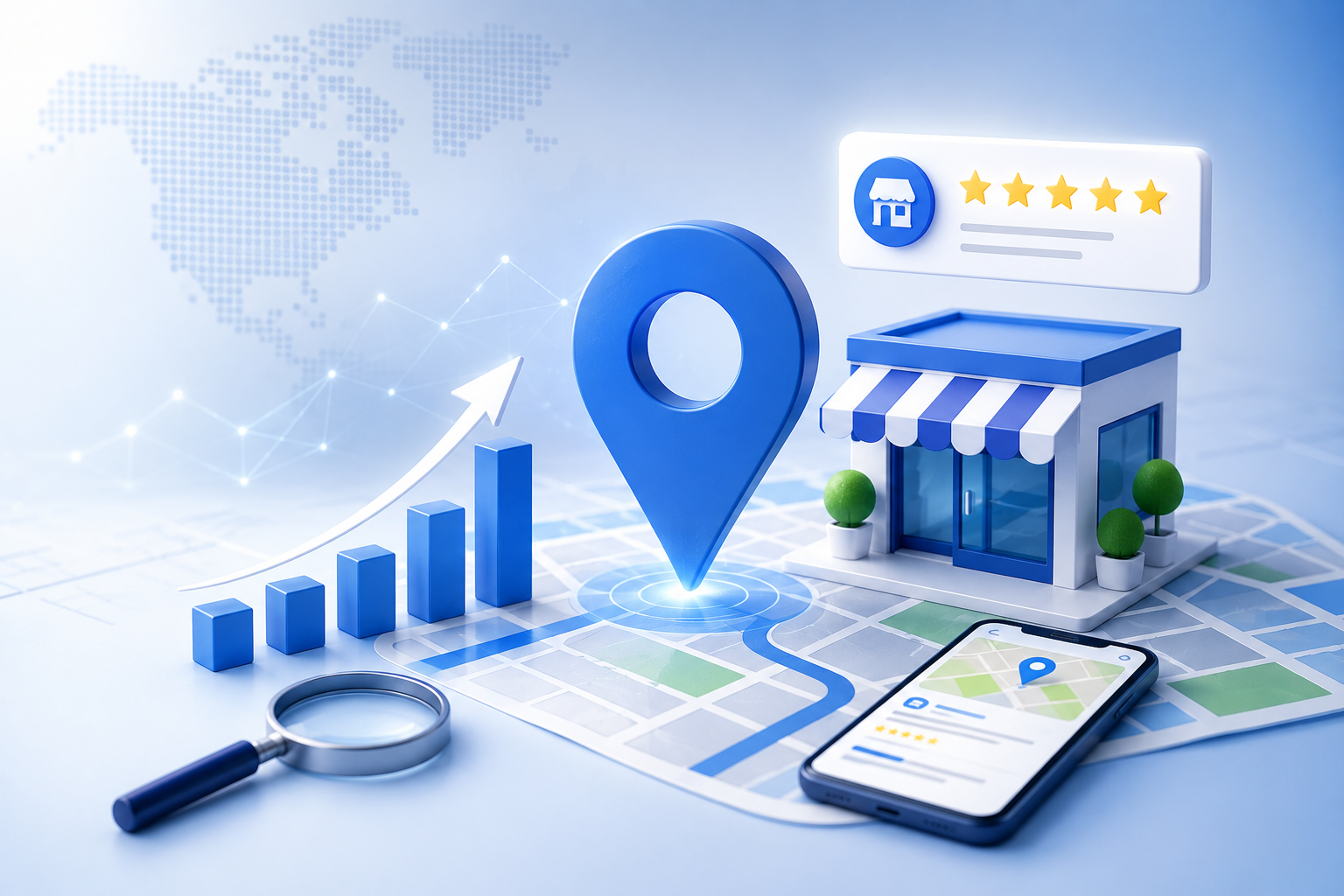
Most people don’t browse for a dentist, a physiotherapist, or a restaurant anymore, they search for one. “Dentist near me,” “Best physiotherapy clinic in Bangalore,” “IVF centre in Greater Noida.” Whoever shows up first in that search has a serious head start before the customer has even picked up the phone.
That’s the entire premise behind Local SEO, and it’s why it’s become one of the highest-leverage investments a small business can make. Get it right, and you’re no longer chasing customers with ads, you’re the business they find on their own.
Importance of Local SEO
Local SEO is the practice of making your business visible in searches tied to a location, think Google Maps results and the “local pack” that shows up above regular search listings. It’s different from general SEO, which competes for visibility nationally or globally. Local SEO narrows the playing field to people who are already nearby and already looking.
It’s built on a handful of factors working together:
- A complete, accurate Google Business Profile
- Keywords based on the search terms your local customers use.
- A steady stream of genuine customer reviews
- Consistent business information across the web (name, address, phone number)
- A website that’s technically sound and easy to navigate
- Local citations and backlinks from relevant directories
None of this work in isolation. A great website with no reviews won’t rank as well as a modest site backed by strong local signals and an active Google Business Profile.
Why It Matters More for Small Businesses?
Large brands can afford to outspend competitors on ads indefinitely. Small businesses generally can’t, and they don’t need to, because their advantage is proximity. A customer searching “physiotherapy clinic near me” isn’t comparing you to a chain across the country; they’re comparing you to two or three other clinics within a few kilometres.
That’s a winnable competition. A focused Local SEO strategy can move a business from page two of Google to the top three map results, and that shift tends to show up quickly in phone calls, walk-ins, and form submissions — not just abstract “traffic.”
Your Google Business Profile Is Doing More Work Than You Think
For most local businesses, Google Business Profile is the first real interaction a customer has with you, often before they ever visit your website. It’s where they check your hours, look at photos, read reviews, and decide whether to call.
The problem is that most businesses set up a profile once and never touch it again. An outdated phone number, a missing service category, or a thin photo gallery can quietly cost you customers who never even reach your website to notice the issue. Profiles that are kept current, accurate, the right categories, with regular photo updates, and prompt responses to reviews, are the ones Google tends to favor in local results.
The Real Advantage: Lower Dependence on Paid Ads
Paid campaigns work, but they stop working the moment you stop paying. Local SEO behaves differently, it builds toward a baseline of visibility that keeps generating leads even in the months you’re not actively running ads.
This doesn’t mean abandoning paid advertising altogether; the two work well together. But businesses that invest consistently in Local SEO typically find their cost per lead drops over time, simply because a growing share of their traffic arrives organically rather than through a paid click. Exact numbers vary a lot by industry, location, and competition, so be cautious of anyone who promises a fixed percentage improvement before even looking at your market.
Where This Makes the Biggest Difference
Local SEO tends to matter most for businesses where customers are choosing based on proximity and trust, healthcare and clinical services especially. Dental clinics, physiotherapy centres, IVF and fertility clinics, aesthetic clinics, and hospitals all compete in searches where reviews, accurate information, and map visibility directly influence whether someone books an appointment.
Results differ by clinic, city, and competition level, so treat any specific growth figure, including ones we might quote elsewhere, as a result of a particular case, not a guarantee. What’s consistent across these industries is the pattern: stronger Google Business Profiles and better local visibility lead to more enquiries, even when nothing else about the business has changed.
What a Local SEO Partner Should Actually Be Doing
If you’re evaluating agencies, it’s worth knowing what proper Local SEO work looks like, because it’s easy to pay for the same generic SEO package regardless of whether it suits a local business:
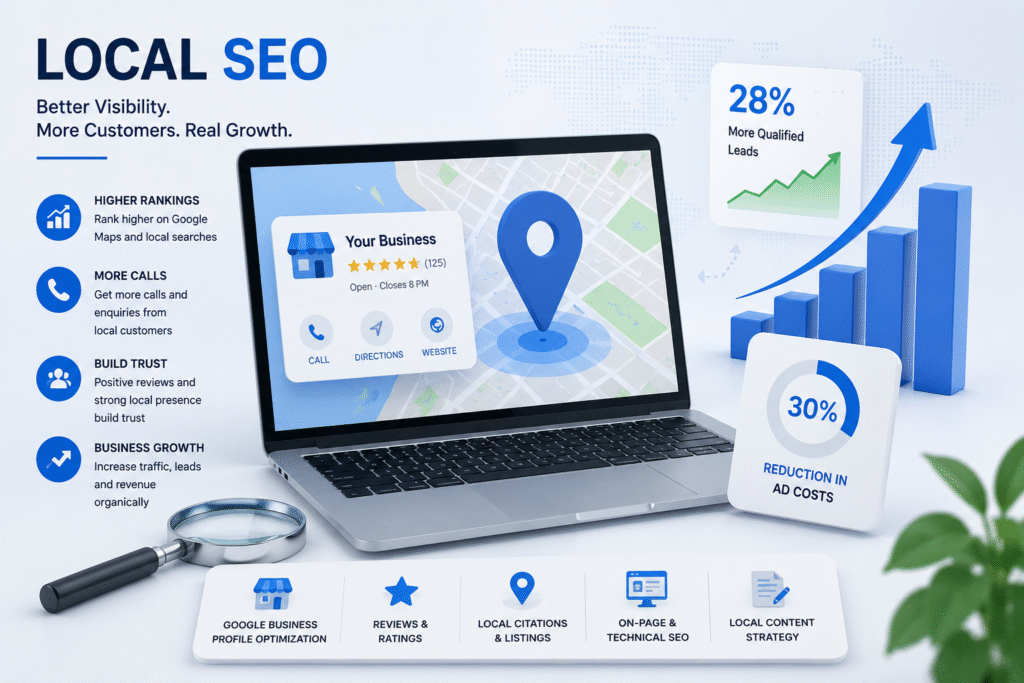
- Google Business Profile setup and ongoing optimization
- On-page and technical SEO for your website
- Local citation building across relevant directories
- Review and reputation management
- Local content strategy tied to your services and area
- Monthly reporting that shows rankings, calls, and traffic, not just vague “visibility” claims
A good partner should be able to explain why a recommendation matters for your specific industry, not just hand over a checklist. A dental clinic and a retail store need different keyword strategies, different review approaches, and different content, even if both fall under “Local SEO.”
Getting Started
You don’t need to overhaul everything at once. The most effective starting point is usually the simplest: claim and complete your Google Business Profile, ensure your business information is consistent everywhere it appears online, and consistently ask satisfied customers for reviews. Those three steps alone move the needle for most small businesses before anything more advanced gets layered on.
From there, ongoing work, content, citations, and technical fixes are compounded over months rather than days. Local SEO isn’t an overnight tactic, but for a small business competing on home turf, it’s one of the few growth channels that gets cheaper the longer you invest in it.
Frequently Asked Questions
How long does Local SEO take to show results?
Most small businesses start seeing movement in rankings and enquiries within 2–4 months, though competitive industries or cities can take longer. It depends heavily on your starting point and how active your competitors already are.
Do I need a website if I already have a Google Business Profile?
Yes. A Google Business Profile helps you get found, but a website gives Google more content to understand your services and gives customers somewhere to learn more and convert. The two work together, not instead of each other.
Is Local SEO better than paid ads for a small business?
They’re not really competitors, paid ads work fast but stop the moment spending stops, while Local SEO builds slower but keeps generating leads in the background. Most small businesses benefit from a mix, weighted more toward organic over time.
How often should I update my Google Business Profile?
Treat it like an active page, not a one-time form. Updating hours around holidays, adding fresh photos periodically, and responding to reviews within a few days all signal to Google that the business is active and trustworthy.